Case study · machine learning · B2B SaaS
A no-code machine learning platform
Fourteen months as the embedded product designer on a platform that lets IT teams build, train and deploy machine learning models without writing code, and without needing a data scientist in the room.
Client work · details anonymised
- Role
- Product designer
- Domain
- Machine learning
- Surface
- Web application
- Year
- 2022–2023
01 · No-code does not delete the pipeline
Machine learning has a real workflow underneath it: connect a source, ingest a dataset, clean and transform it, choose features, tune training, train, evaluate, explain, predict, deploy. None of those steps can be removed. A no-code product does not get to skip the pipeline. It only gets to change who can walk it.
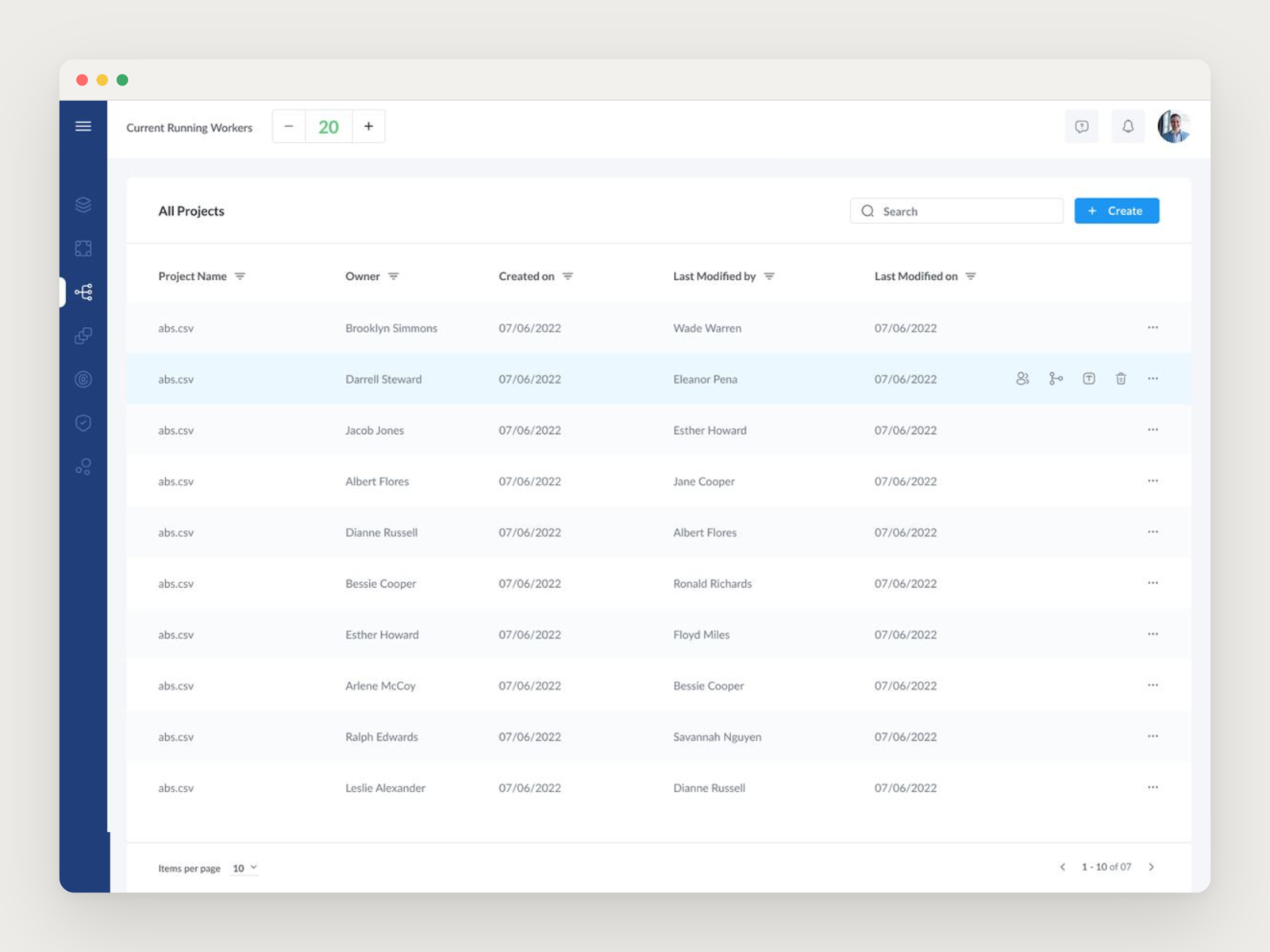
So the job was not simplification in the cosmetic sense. It was sequencing: taking a workflow a data scientist holds in their head and laying it out as a path an IT generalist could follow without knowing in advance what they were about to need.
02 · Designed against the build, every month
I worked embedded with the founding team as the only designer. The founders shared wireframes and intent; I turned them into Figma flows rather than single frames, and short calls several times a week each settled one thing. Developers and testers fed back on feasibility, and screens changed because of it.
Over fourteen months that came to around 190 screens, and every one of them had to survive contact with what the team could actually ship that month. That rhythm is why the product reads as one system rather than a deck of ideas.
03 · The wizard is the product
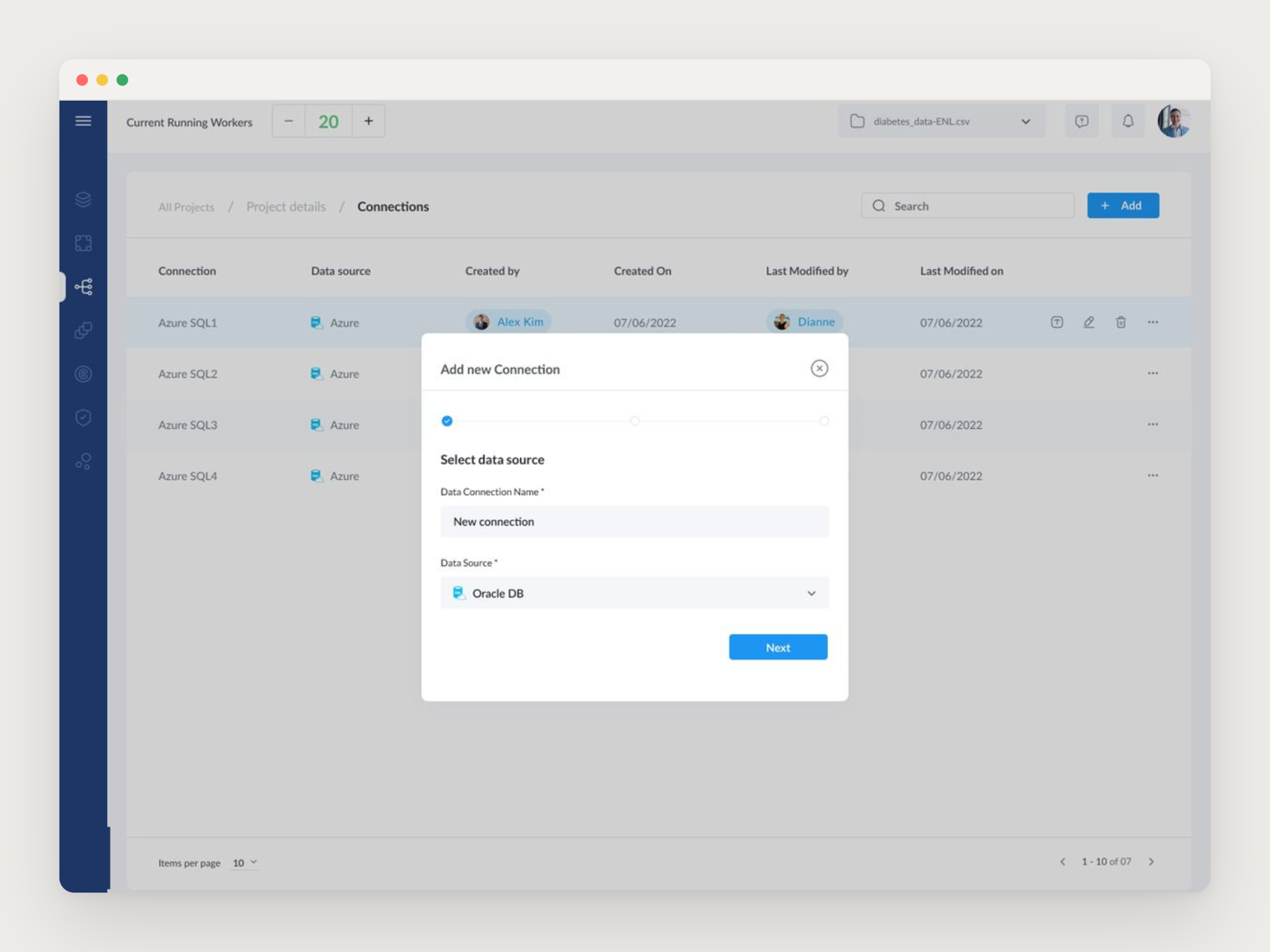
Data comes in through connections, treated as first-class objects: a list of what is wired up, and a stepped wizard for adding a new one, so a user picks a source, authenticates and names it without ever seeing a connection string.
Almost every irreversible step in the product is wrapped in the same kind of stepped modal with a visible progress rail. The repetition was deliberate. Once someone has learned one wizard, they have learned all of them, which is what makes it possible to add a complicated step later without retraining anyone.
04 · Never hide the data
Transformation is a visual pipeline where components are chained and the output of each is inspectable. This is the screen that decides whether a no-code product is honest. If the pipeline is a black box, nobody trusts the model at the end of it, so raw data stays viewable at every stage.
Training follows the same principle. Pre-processing, sampling, validation split and seed sit in a panel rather than behind defaults. The no-code promise is that you do not have to touch them, not that you cannot.
05 · Explain sits next to Predict
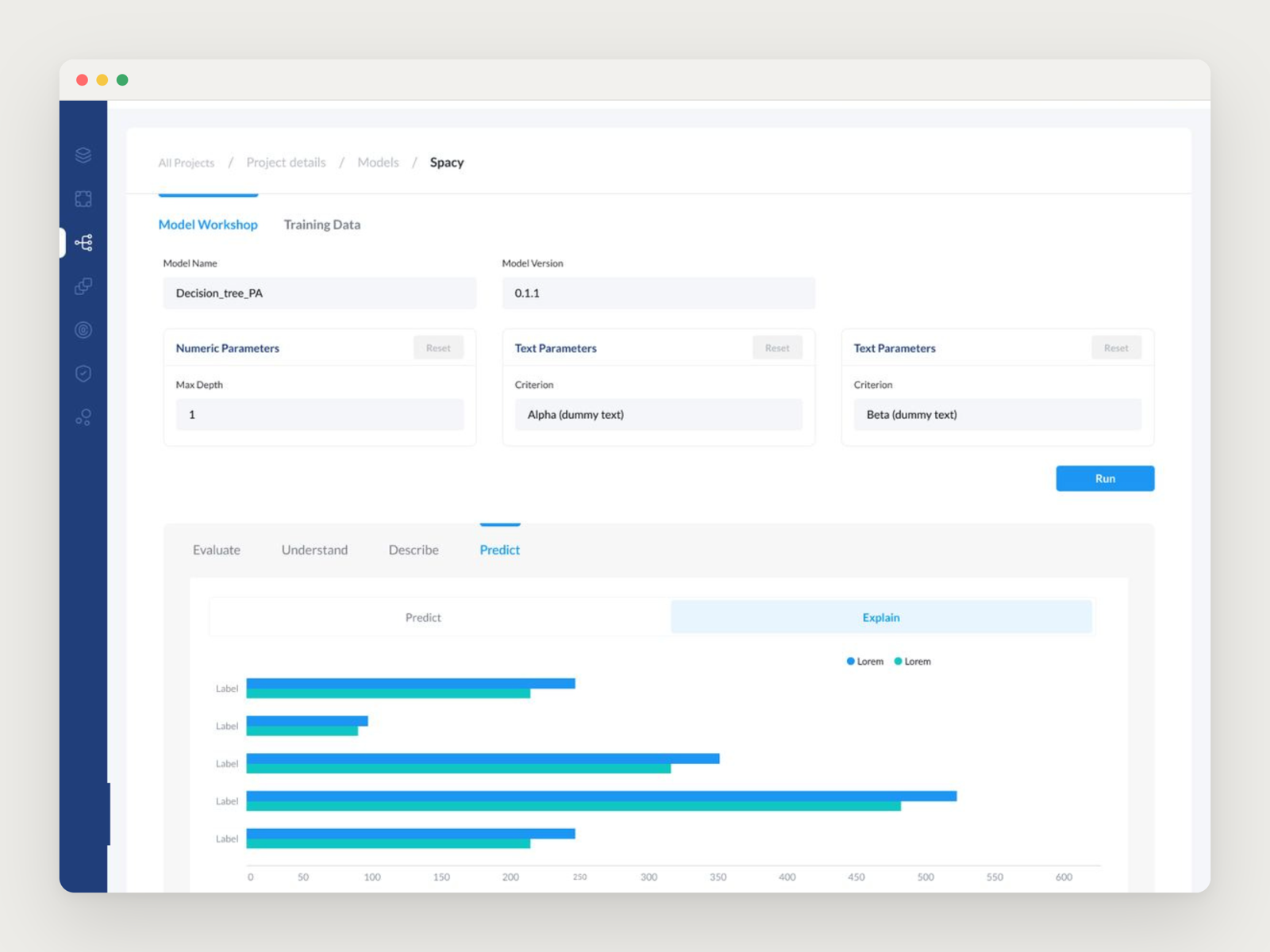
A trained model opens into a workspace where explaining a result sits at the same level as producing one. Feature importance is a ranked bar chart, so a business user can say which inputs drive the output, and a prediction can be run against new inputs right there.
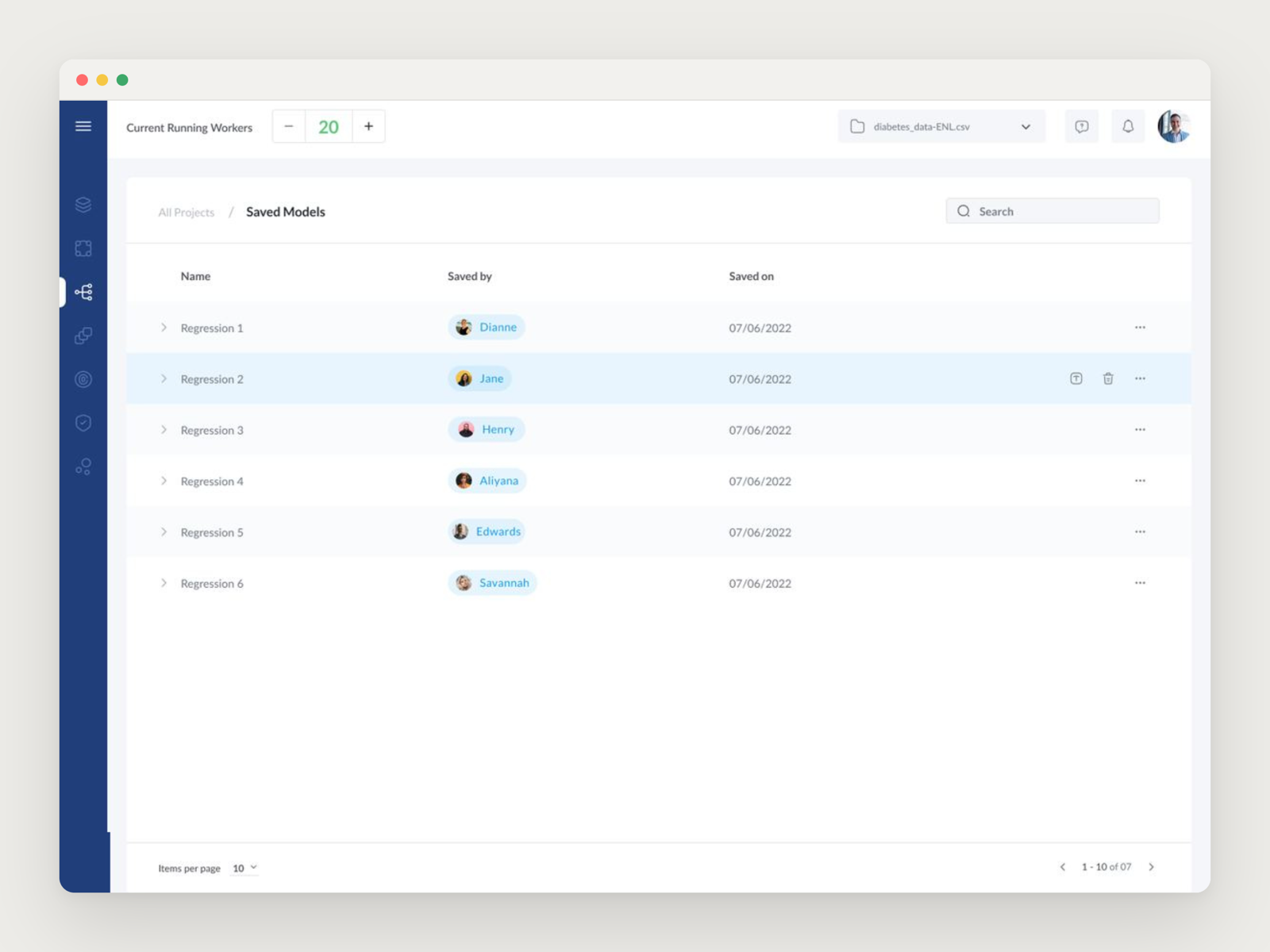
Putting the two side by side states a position: a prediction you cannot account for is not finished. Saved models sit in a versioned list, so you can see who saved what and compare runs over time.
06 · Designed for the reviewer, not the demo
The client reviewed real screenshots and sent back numbered, hand-annotated notes, so screens were laid out to make a marked-up image a workable review artefact. Feedback from their customers was positive.
The engagement began as a two-week trial and became fourteen months, expanding from the core product into the blog, a pitch deck and a one-pager, and then into a second company run by the same founder.